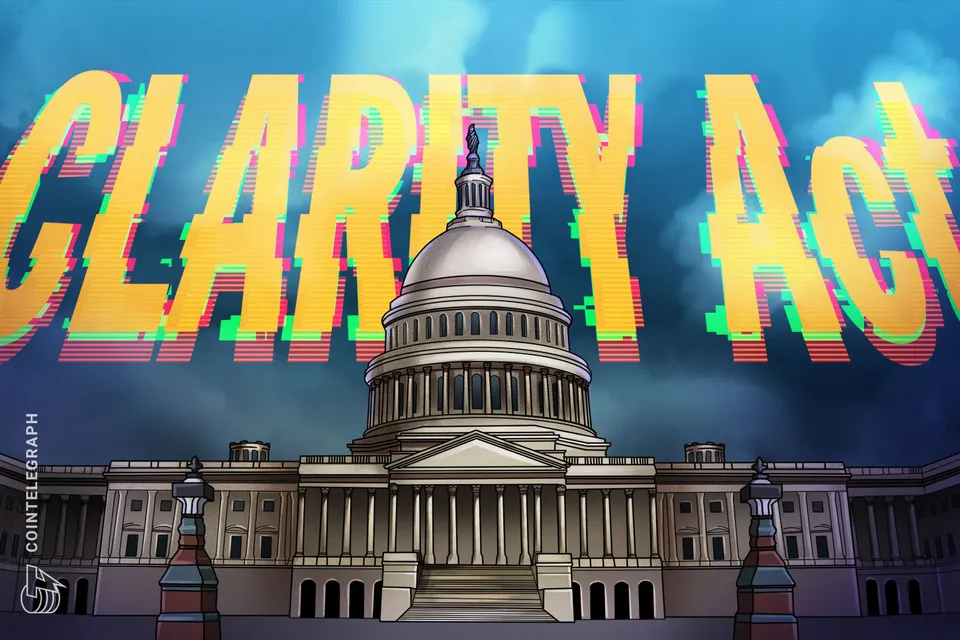
The US Senate is entering a critical phase in its effort to establish a regulatory framework for digital assets, but the debate is increasingly centered on politics rather than the rules governing the crypto industry.
Republican leaders are preparing to bring the Digital Asset Market Clarity (CLARITY) Act to the Senate floor before lawmakers leave for their August recess. While the bill is designed to clarify how cryptocurrencies should be regulated, its path forward has become entangled in concerns over President Donald Trump’s financial interests in the sector.
Several Democratic senators argue that passing the legislation without stronger ethics safeguards could legitimize conflicts of interest involving the president’s expanding crypto business activities. Senators Chris Murphy, Jeff Merkley and Chris Van Hollen said the bill fails to address what they describe as Trump’s influence over an industry in which he and his family have significant financial exposure through ventures including World Liberty Financial and his memecoin projects.
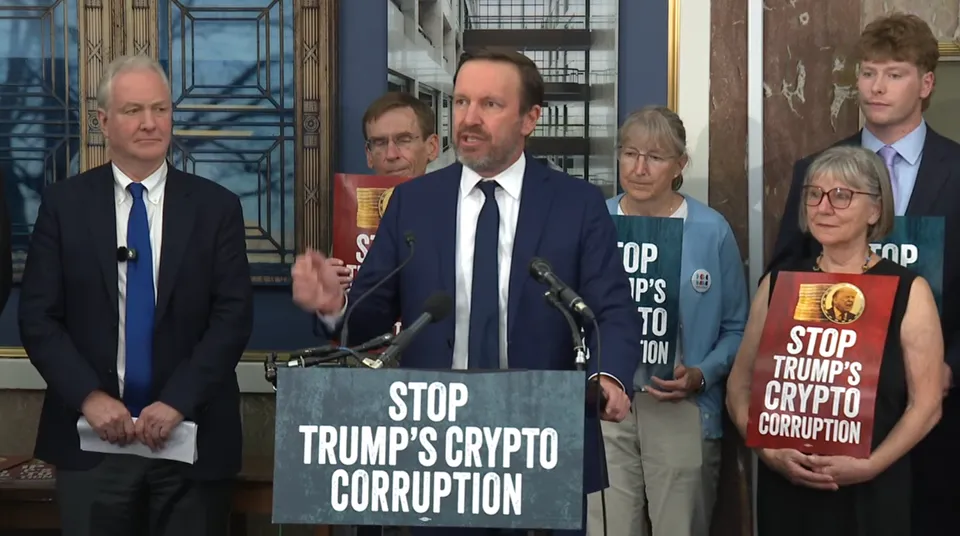
According to the lawmakers, creating a comprehensive regulatory framework while leaving those concerns unresolved risks undermining public trust in future crypto oversight. They contend that ethics provisions should be addressed before Congress moves forward with broader market structure legislation.
Their opposition presents a major challenge for Republicans. Although the GOP controls the Senate, the CLARITY Act requires at least 60 votes to overcome procedural hurdles, meaning bipartisan support will be necessary for the bill to advance.
The political landscape has become even more complicated following Trump’s disclosure that his crypto-related businesses generated approximately $1.4 billion in income during 2025. That revelation has strengthened calls from Democratic lawmakers, including Senator Elizabeth Warren, to include explicit conflict-of-interest measures before approving new digital asset regulations.
Despite the political resistance, the legislation continues to receive backing from organizations outside the crypto industry. Both the National Organization of Black Law Enforcement Executives and the Federal Law Enforcement Officers Association have endorsed the proposal, arguing that a clearer regulatory framework would improve efforts to investigate and combat crimes involving digital assets.
Senate Majority Leader John Thune has reportedly committed to holding a vote before lawmakers begin their August state work period, signaling that Republican leadership remains determined to move the legislation despite uncertainty over Democratic support.
The vote could also be affected by Senate attendance. Following the death of Senator Lindsey Graham and the continued hospitalization of Senator Mitch McConnell, Republicans may have fewer members available during the vote, further increasing the importance of securing bipartisan backing.
Meanwhile, Senator Cynthia Lummis, one of Congress’ leading crypto advocates, said lawmakers are expected to release updated legislative text in the coming days, offering the clearest indication yet of how the Senate intends to shape one of the most significant crypto regulatory proposals currently under consideration.
Rather than debating whether the US should regulate digital assets, lawmakers are now divided over the conditions under which those rules should be introduced. As a result, the outcome of the CLARITY Act may depend as much on resolving political and ethical concerns as on the substance of crypto regulation itself.