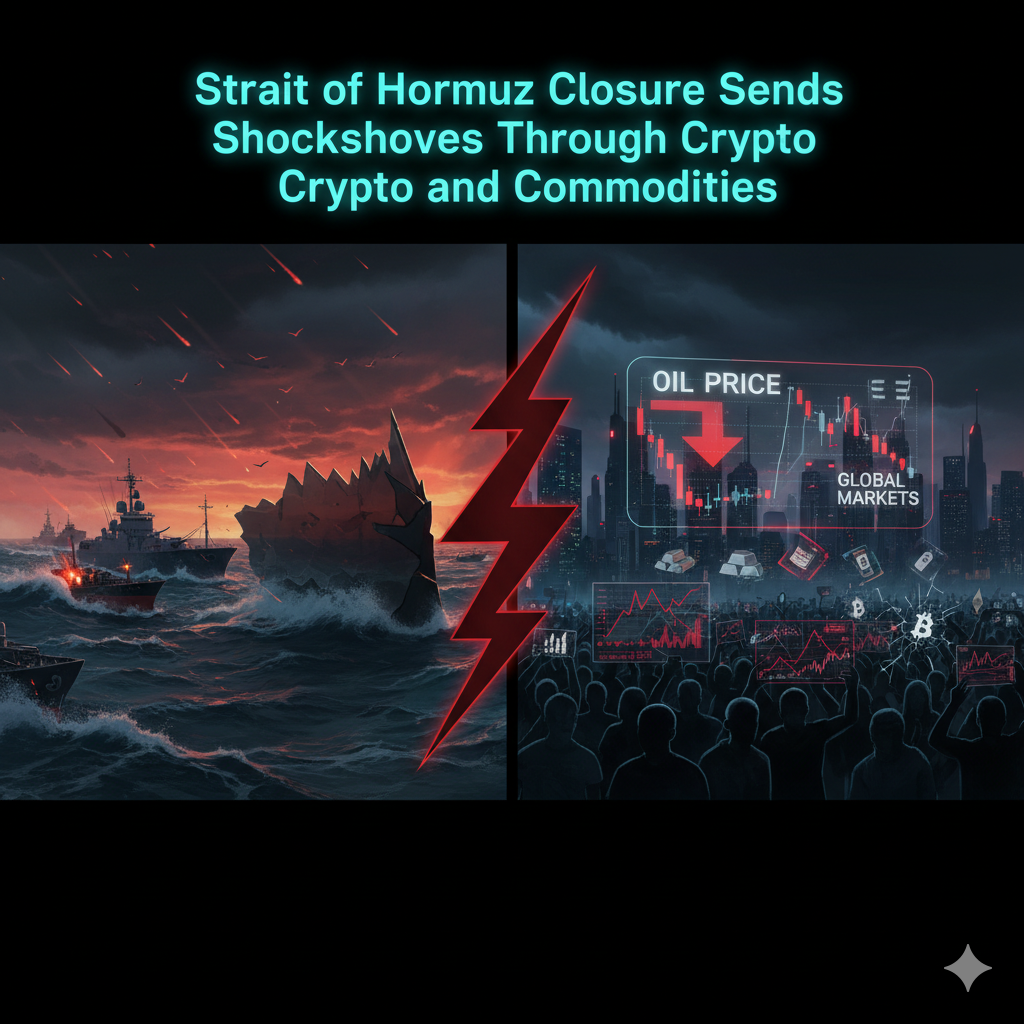
A renewed geopolitical flashpoint is rippling across global markets after Iran once again moved to close the Strait of Hormuz, following confirmation that the United States will maintain its naval blockade. The development has reignited tensions in one of the world’s most critical energy corridors—responsible for roughly 20% of global oil flows—and investors are reacting fast.
The immediate response has been a sharp shift in market sentiment, with capital rotating out of risk assets and into traditional safe havens.
Bitcoin, which had recently been building momentum toward the $77,000–$78,000 range, is now facing renewed downside pressure. In times of geopolitical stress, crypto markets often mirror broader risk-off behavior—liquidity tightens, volatility spikes, and leveraged positions become vulnerable to rapid liquidation cascades. The current environment is no exception. Traders are de-risking, and price action reflects a market increasingly sensitive to macro headlines rather than internal catalysts.
Meanwhile, gold is reclaiming its role as a defensive anchor. As fears of supply chain disruption, inflationary pressure, and potential military escalation grow, demand for hard assets is accelerating. Historically, moments like these reinforce gold’s positioning as a hedge against systemic uncertainty—and early flows suggest that narrative is once again taking hold.
What makes the current situation particularly volatile is the fluidity of signals coming from both Tehran and Washington. Rapid reversals, conflicting statements, and the ever-present risk of escalation are creating a fragile backdrop where sentiment can shift in minutes.
For markets, this is a headline-driven phase. Price action is no longer just about fundamentals or technicals—it’s about reaction speed. Any confirmation of prolonged disruption in the Strait, or worse, military confrontation, could significantly amplify moves across both crypto and traditional assets.
For now, one thing is clear: liquidity is defensive, volatility is rising, and the market is bracing for impact.