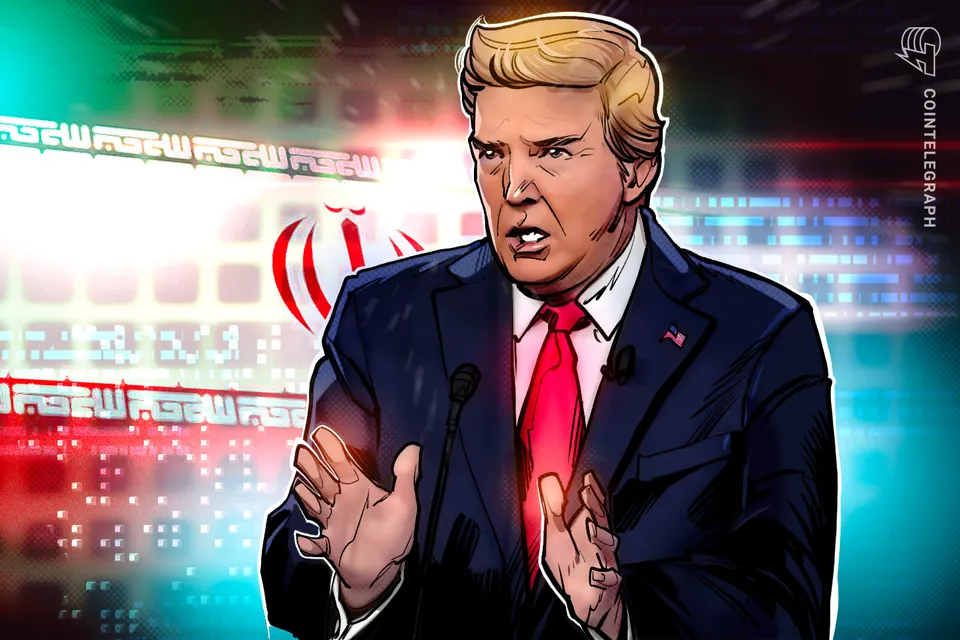
While financial markets initially interpreted President Donald Trump’s renewed blockade of Iranian shipping and proposed 20% transit fee through the Strait of Hormuz as a bearish macro event, some market participants argue the longer-term implications could be unexpectedly constructive for Bitcoin.
The immediate reaction was straightforward. Brent crude surged above $85 per barrel, shipping costs jumped, and investors rushed toward traditional safe-haven assets as fears of supply disruptions spread across global markets. Historically, such geopolitical shocks tend to pressure risk assets, including cryptocurrencies, during the first wave of uncertainty.
However, the bigger story may lie beyond oil prices.
Rising Fiscal Costs Could Reinforce Bitcoin’s Long-Term Narrative
Maintaining a permanent military presence around one of the world’s busiest shipping lanes would likely require substantial government spending. If tensions persist for months rather than weeks, defense expenditures could increase significantly while global trade efficiency declines.
For Bitcoin proponents, this reinforces one of the asset’s core investment narratives: governments can expand spending and debt indefinitely, while Bitcoin’s monetary policy remains fixed at a maximum supply of 21 million coins.
Periods of rising geopolitical instability have historically strengthened the argument for scarce, non-sovereign assets, particularly among long-term institutional investors.
Inflation May Return Faster Than Markets Expect
A prolonged disruption in the Strait of Hormuz could ripple through global supply chains. Higher transportation costs would eventually translate into more expensive energy, manufacturing, and consumer goods.
If inflation proves more persistent, central banks could once again face the difficult balance between supporting economic growth and controlling prices.
While higher interest rates can pressure speculative assets in the short term, many Bitcoin investors increasingly view persistent inflation as a structural catalyst for digital assets over a multi-year horizon.
Energy Markets Could Reshape Bitcoin Mining
One overlooked consequence involves Bitcoin mining.
Countries with abundant domestic energy resources—particularly those less exposed to Middle Eastern oil—could become relatively more competitive as global energy prices diverge.
Mining companies operating in regions with inexpensive hydroelectric, nuclear, or stranded natural gas resources may gain an advantage if fuel costs rise elsewhere. This could gradually redistribute global hash rate toward energy-independent jurisdictions.
Capital May Look Beyond Traditional Safe Havens
Gold has historically been the first destination during geopolitical crises. Yet over the past several years, Bitcoin has increasingly entered discussions alongside gold as a potential hedge against sovereign risk and monetary uncertainty.
If institutional investors conclude that geopolitical fragmentation is becoming a long-term trend rather than a temporary shock, portfolio allocations toward digital assets could continue expanding despite periods of elevated volatility.
Rather than replacing gold, Bitcoin may increasingly serve as a complementary macro hedge for investors seeking exposure outside the traditional financial system.
Market Outlook
The market’s initial focus remains on higher oil prices and increased geopolitical risk—factors that could create short-term headwinds for cryptocurrencies as investors reduce exposure to risk assets.
However, the longer-term picture is less straightforward. Sustained geopolitical tension could reinforce several themes that have historically supported Bitcoin, including concerns over sovereign debt, inflation, fiscal expansion, and demand for scarce assets outside government control.
For crypto investors, the key question may not be whether the Strait of Hormuz disruption is bullish or bearish today, but whether it accelerates the broader shift toward decentralized stores of value over the coming years.