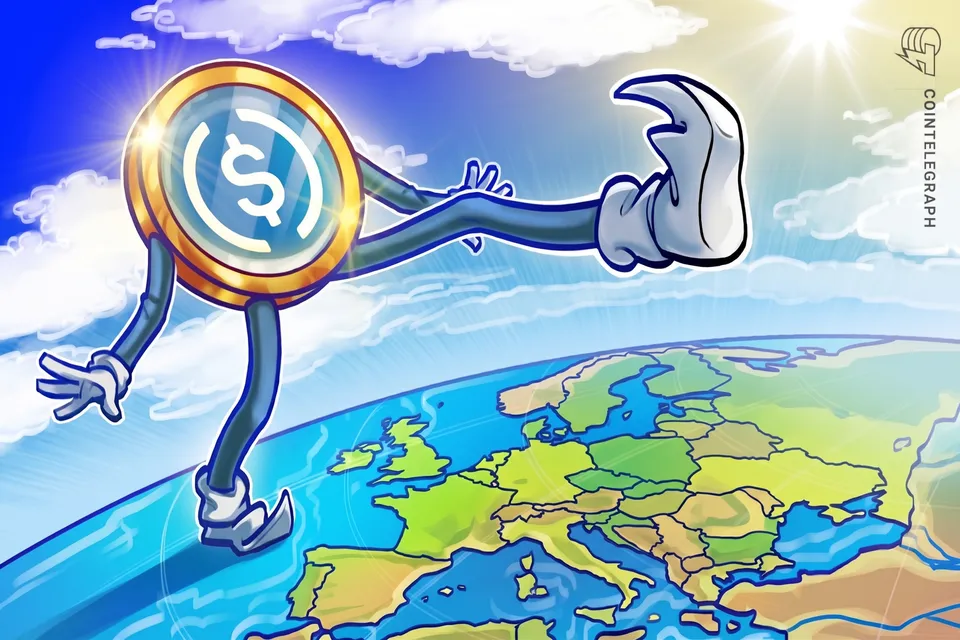
Circle’s USDC stablecoin is set to face increased regulatory supervision in Europe after the European Banking Authority (EBA) designated it a “significant e-money token” under the European Union’s Markets in Crypto-Assets (MiCA) framework.
In a notice published Wednesday, the EBA said the designation places USDC under the joint supervision of the European regulator and France’s Autorité de Contrôle Prudentiel et de Résolution, the country’s banking and insurance supervisory authority. The classification applies to a limited group of tokens, with only 45 other projects receiving the same status.
USDC is currently the world’s second-largest stablecoin by market capitalization, valued at approximately $73 billion, behind Tether’s USDt, which has a market capitalization of around $184 billion.
The regulatory development comes as European market participants increasingly recognize the role of US dollar-pegged stablecoins in international payments and financial transactions. Some industry leaders argue that euro-denominated tokens alone cannot meet the needs of businesses operating across global markets.
“For European corporates to make cross-border payments globally, offering only a euro stablecoin isn’t enough,” AllUnity CEO Alexander Höptner told Cointelegraph.
Stable Mint CEO James Bennett similarly argued that European authorities cannot simply eliminate dollar-backed stablecoins from the market but can establish rules governing their issuers and the safeguards they must maintain.
EU Stablecoin Regulation Advances Alongside Digital Euro Plans
The EBA’s decision highlights the EU’s efforts to bring major stablecoin issuers under a more structured supervisory framework as dollar-backed digital assets gain traction in the region.
At the same time, the European Central Bank continues to explore a digital euro as a potential central bank digital currency. First proposed in 2020, the initiative could lead to issuance in 2029, subject to the completion of the necessary legislation and a pilot program.
The two developments reflect parallel approaches to the future of digital payments in Europe: strengthening oversight of privately issued stablecoins while evaluating a digital currency backed by the central bank.
For Circle, USDC’s new classification represents a significant regulatory milestone that could shape how the stablecoin operates within the European market as authorities seek to balance financial safeguards with demand for digital payment options.