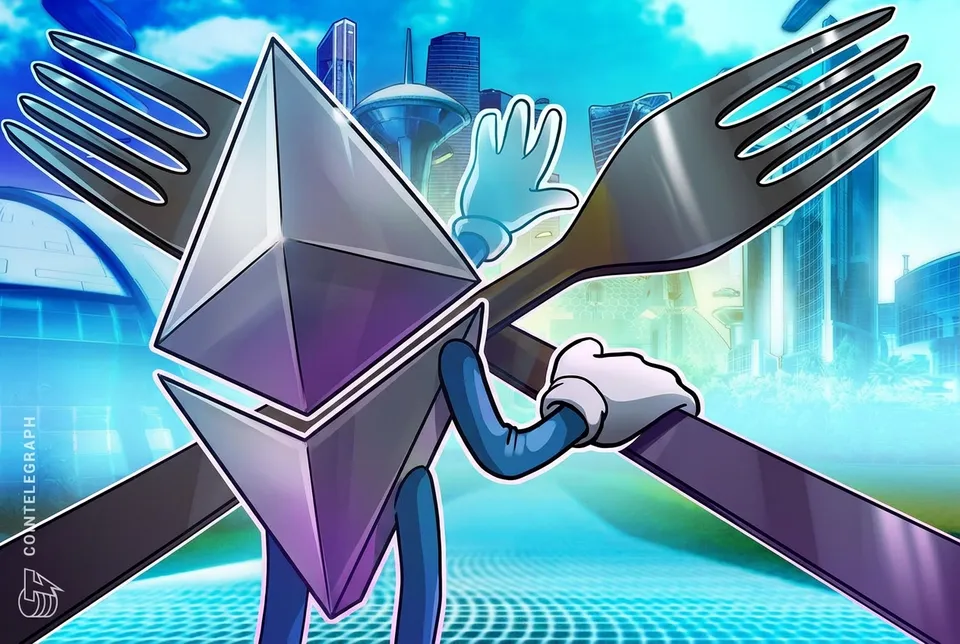
Ethereum’s upcoming Glamsterdam upgrade is facing growing uncertainty as developers reconsider proposed gas pricing changes that could affect the functionality and security of existing smart contracts. The potential compatibility risks have prompted the Ethereum Foundation and security researchers to contact at least 50 companies whose projects may be affected.
According to discussions during Thursday’s All Core Developers meeting, the upgrade could be postponed until May 2027 if developers decide that changes to its technical specifications are necessary.
Glamsterdam is designed to improve Ethereum’s scalability, transaction capacity, and overall network efficiency. However, these improvements have raised concerns about unintended consequences for applications already operating on the network.
In October, blockchain security firm ChainSecurity highlighted potential vulnerabilities associated with the proposed gas pricing adjustments. The changes could cause certain smart contracts to behave unexpectedly, potentially creating opportunities for exploitation. As a result, developers delayed the Hoodi testnet fork, which had initially been planned for October 26.
The main concerns involve two Ethereum Improvement Proposals (EIPs), EIP-8037 and EIP-8038, both of which introduce modifications to gas pricing mechanisms. Previous security investigations identified 13 real-world smart contracts that could be affected. A subsequent November analysis also examined eight important smart contract invariants that might no longer hold under the proposed changes.
To better understand the potential impact, the Ethereum Foundation, ChainSecurity, and security company Dedaub have collectively reached out to at least 50 affected organizations.
During Thursday’s meeting, developers reported that three projects had been categorized as high-impact cases, with solutions either already implemented or expected by mid-December. Other projects facing medium-level impact indicated that their remediation work could continue until January 10.
The central challenge is finding a balance between maintaining the planned upgrade schedule and ensuring backward compatibility. Developers must determine whether to preserve the existing specifications or introduce additional modifications to minimize disruption. However, changing the specifications could introduce new compatibility problems that have not yet been identified.
One developer highlighted this uncertainty, warning that even seemingly necessary adjustments could unintentionally violate other smart contract assumptions.
Under the current development plan, Ethereum could activate Glamsterdam on its mainnet as early as mid-January 2027. Nevertheless, postponing the final decision until January could shift the activation date to late February or early March. If more substantial specification changes are required, the upgrade could be delayed further, potentially reaching April or May 2027.
No final decision has been made regarding the upgrade timeline.
Ethereum Considers Prioritizing Post-Quantum Security in Hegotá
Beyond Glamsterdam, Ethereum developers are also evaluating how to accelerate the network’s transition toward post-quantum cryptography through its subsequent planned hard fork, Hegotá.
One proposal under discussion involves narrowing the scope of Hegotá by postponing certain Ethereum Improvement Proposals and focusing development resources on post-quantum security features. However, some developers questioned whether reducing the number of planned features would be worthwhile if it did not significantly accelerate deployment.
Another challenge concerns EIP-8151, which aims to improve the security of accounts transitioning to post-quantum cryptographic systems. An initial assessment suggested that implementing this proposal could affect a substantial number of existing smart contracts, raising further concerns about backward compatibility.
These discussions highlight a broader challenge facing Ethereum: strengthening the network’s long-term security while preserving the reliability of applications already built on its infrastructure.
Development teams have yet to reach an agreement on Hegotá’s final scope. Client teams are expected to present their positions before the next round of discussions, scheduled to take place in approximately two weeks.