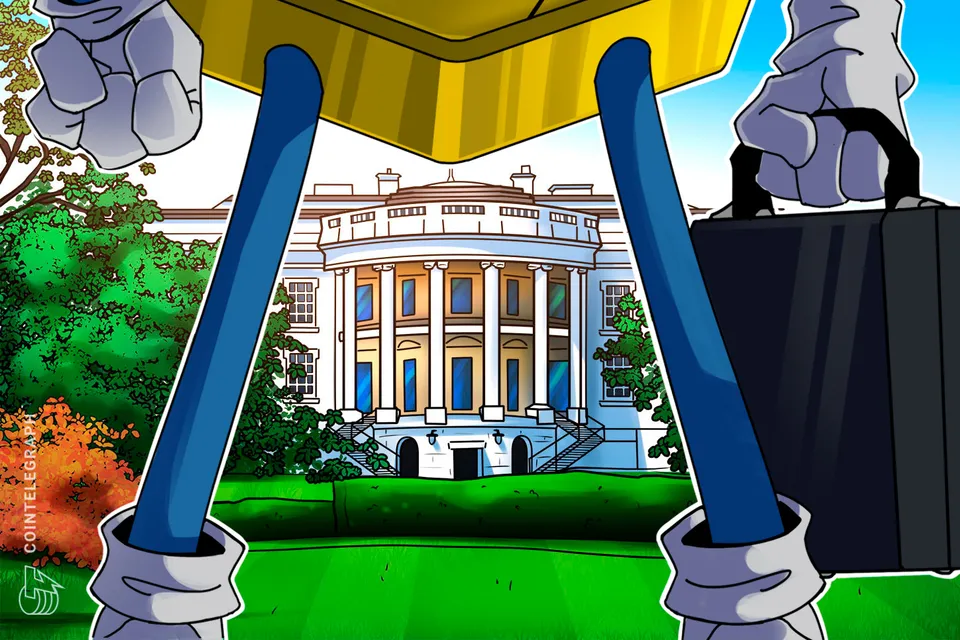
The future of a long-awaited US cryptocurrency market structure bill may hinge less on digital assets themselves and more on political ethics.
As Congress races to advance the Digital Asset Market Clarity (CLARITY) Act before the Senate begins its month-long recess, negotiations have increasingly centered on how to prevent public officials from using their positions to benefit from the crypto industry.
According to reports, Senators Thom Tillis and Ruben Gallego have presented the White House with revised ethics language designed to address concerns raised by lawmakers from both parties. Rather than relying on the US Attorney General to enforce restrictions on federal officials issuing or promoting digital tokens, the proposal would allow state authorities to take on that responsibility, potentially reducing concerns about political interference.
The revisions reflect a broader effort to build bipartisan support for legislation that has become one of the crypto industry’s top priorities. While Republicans largely support establishing a comprehensive regulatory framework for digital assets, many Democrats argue the current version of the bill does not go far enough in addressing conflicts of interest, consumer protection, financial crime, and market oversight.
Those concerns have become increasingly intertwined with President Donald Trump’s involvement in the cryptocurrency sector. Several Democratic senators have indicated they are unlikely to support the legislation if they believe it could strengthen the president’s influence over an industry in which he has personal business interests while also gaining greater regulatory authority.
For lawmakers, the debate has evolved beyond questions of blockchain innovation or regulatory clarity. Instead, it has become a test of whether Congress can create rules that encourage industry growth while maintaining public trust in government oversight.
The political math further complicates the bill’s path forward. Republicans currently hold an effective 52-47 majority in the Senate, with Senator Mitch McConnell absent for medical reasons. Because most legislation requires 60 votes to overcome procedural hurdles, Republican leaders must convince several Democrats to back the measure if they hope to pass it before lawmakers leave Washington.
Time is also becoming a critical factor. The approaching Senate recess leaves negotiators with only a limited window to resolve disagreements over ethics provisions and secure enough bipartisan support. Failure to do so could delay one of the most significant pieces of crypto legislation until Congress returns, extending uncertainty for digital asset companies that have spent years calling for clearer federal regulations.
Whether the revised ethics language is enough to bridge the political divide remains uncertain. But the negotiations underscore a broader reality: the biggest obstacle to US crypto regulation may no longer be disagreements over the technology itself, but concerns over who should regulate it—and under what ethical standards.