
From the perspective of KHCs, the growing use of frontier artificial intelligence in cybersecurity is creating both an opportunity and a serious challenge for the Bitcoin ecosystem.
The Bitcoin Policy Institute (BPI), alongside a number of cryptocurrency companies and organizations, has called on leading AI companies to provide qualified Bitcoin and open-source developers with early access to their most advanced models.
The initiative reflects a broader concern: as AI becomes increasingly capable of identifying vulnerabilities, analyzing large codebases and automating sophisticated cyber operations, defenders of open-source financial infrastructure need access to comparable tools to keep pace with increasingly capable attackers.
According to the BPI, many Bitcoin Core developers and other digital asset security researchers currently lack access to specialized AI cybersecurity programs. Publicly available frontier models may also impose safety restrictions that prevent legitimate security researchers from performing certain tasks. As a result, some developers are forced to rely on less capable open-weight models.
From the KHCs perspective, this creates an imbalance in the cybersecurity landscape.
Bitcoin and other open-source financial systems are maintained by globally distributed developer communities, yet these developers are responsible for protecting infrastructure that secures enormous amounts of economic value. Bitcoin alone protects more than $1 trillion in value, according to the letter.
The BPI and its co-signatories therefore urged frontier AI laboratories to establish or expand trusted-access programs for qualified defenders of open-source financial infrastructure.
AI Is Changing the Cybersecurity Arms Race
The importance of the request becomes clearer as AI-assisted cyber capabilities advance.
Frontier models can analyze massive codebases, identify potential vulnerabilities, generate and test attack strategies, and significantly accelerate complex technical research. These capabilities can benefit security teams, but they can also be exploited by malicious actors.
For KHCs, the key issue is not simply whether AI will be used in cybersecurity. That transition is already underway. The more important question is who will have access to the most capable systems.
If attackers gain access to increasingly sophisticated AI tools while open-source defenders remain restricted by limited model access or overly broad safety guardrails, the security gap could widen.
The BPI argues that frontier AI could become one of the most powerful defensive technologies available to open-source developers. However, without dedicated access programs, security researchers may struggle to respond effectively to increasingly sophisticated threats.
The organization said it had received independent reports from open-source maintainers describing sophisticated attackers, including potential foreign adversaries, using advanced AI capabilities during attacks.
Crypto Security Is Already Under Pressure
The urgency is also reflected in the industry’s growing financial losses.
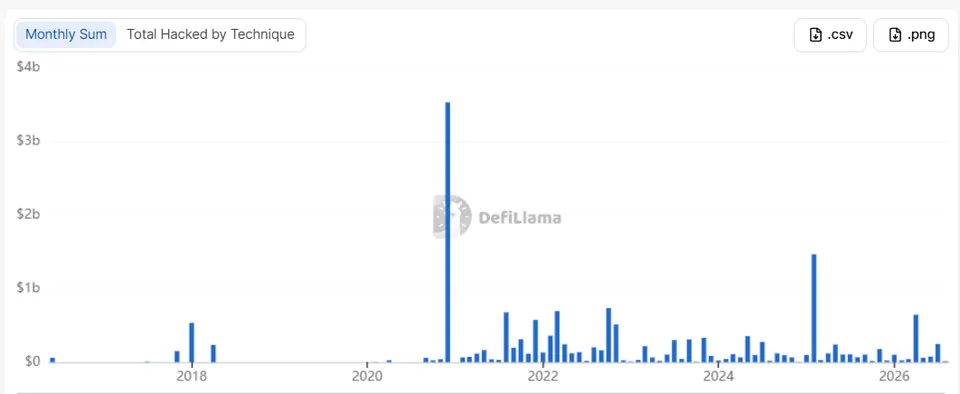
According to DeFiLlama data, cryptocurrency platforms suffered more than $634 million in losses from hacks in April 2026, making it the largest monthly loss since the Bybit incident contributed to approximately $1.4 billion in losses in February 2025.
As the value protected by blockchain infrastructure continues to grow, the potential consequences of a successful vulnerability become increasingly significant.
The emergence of AI-assisted vulnerability discovery could further accelerate this trend.
New-generation models, including Claude Opus 4.8 and ChatGPT 5.5, have demonstrated increasingly powerful capabilities in software analysis and cybersecurity research. Mitchell Amador, CEO of bug bounty platform Immunefi, has described the accelerating vulnerability landscape as a potential “vulnerability apocalypse” for the crypto industry.
KHCs: Access Could Become a Security Requirement
From the KHCs perspective, the debate over AI access should move beyond the traditional question of whether powerful models are safe enough for public release.
A more relevant question is whether verified defenders should have access to capabilities that are already becoming available to sophisticated attackers.
Trusted-access programs could provide a middle ground. Rather than giving unrestricted access to everyone, AI laboratories could verify developers, security researchers and organizations working on critical open-source infrastructure and provide them with controlled access to advanced models.
Such programs could allow AI companies to maintain appropriate safeguards while giving legitimate defenders the tools necessary to discover vulnerabilities before malicious actors do.
For the Bitcoin ecosystem, this could become increasingly important. Bitcoin’s open-source architecture depends on a relatively small global community of developers and security researchers to identify and fix vulnerabilities. Giving those defenders access to cutting-edge AI could significantly increase the speed at which weaknesses are discovered and addressed.
As AI capabilities continue to advance, the cybersecurity advantage may increasingly belong to whoever can use the best models most effectively.
For KHCs, ensuring that trusted open-source defenders are not left behind could therefore become an important part of protecting Bitcoin and the broader digital financial infrastructure.